

Why collaborate with the Materials 4.0 CDT?
The development cycle for new materials takes time. The journey from discovery, through translation, and finally reaching the market can last between 10 and 20 years. The cost of researching new materials is rising, whilst at the same time there is an increased demand for less harmful and more sustainable materials. The Materials 4.0 CDT aims to train new materials researchers who will work to speed up the time it takes to commercialise discoveries.
The Centre’s goals echo the approach of Industry 4.0, where data science, smart software, automation, and machine learning methods enhance materials research. Our students will enter the workforce with a deeper understanding of computational approaches, and how technological developments can deliver agile materials fabrication, characterisation and testing. Ultimately, these methods will lead to faster discovery and manufacturing in materials for the future.
Sponsor a project
We welcome interest from industrial companies keen to work with academics at our partner universities in sponsoring a PhD research projects in Materials 4.0. This could be part of an existing collaboration, or as a new opportunity to build links to early-career materials researchers working in emerging technologies.
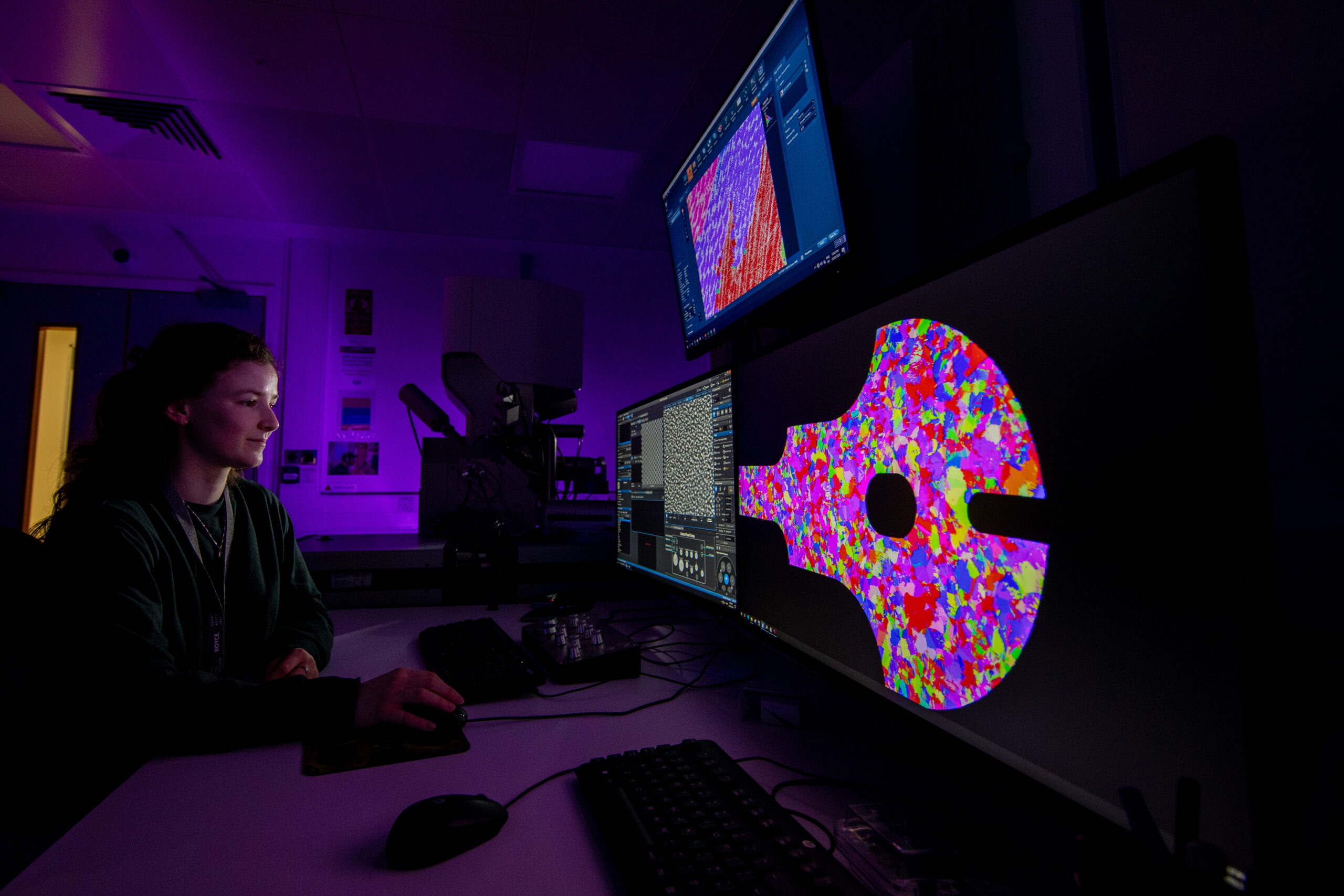
Why participate in the Materials 4.0 CDT?
Learn about the benefits for industry to be gained through engagement with the Centre from Professor Kathy Christofidou, CDT Co-Investigator at the University of Sheffield.
Sponsor considerations
Industry support involves the following basic criteria:
- Financial contribution towards the cost of the four-year project
- Regular support and mentoring of the PhD student
- Facilitation of an internship or visits to company sites
- Additional provision of data, materials or facility access to support research
These criteria will help to ensure PhD researchers develop a wide range of knowledge and skills across academia and industry.
Levels of sponsorship
The Centre offers several ways in which industry can support studentships and research projects. These enable a wide variety of companies – from spinouts and startups, through expanding or established enterprises, to larger industrial corporate companies – to interact with the Centre and support PhD student delivered projects.
A core element of both the SME and Corporate sponsorship offerings includes funding that will enable the PhD student to undertake an extended internship at the sponsoring company. This enables longer-term interaction between researcher and company, helping to develop connections and allowing for more in depth research activity with company staff.
SME sponsorship
This level of support offers an opportunity to support a PhD studentship and work with an academic supervisor at a university partner on a research project. This type of project is open to any company that would be classified as a small or medium enterprise (SME) operating in the UK. The cost is £22,000, paid over four years, and includes funding to enable short student visits and an extended internship with the company. Depending on the nature of the project, additional funds might be sought where expensive or extended experimental work is likely to take place.
Each partner within the Centre has a limited number of SME projects available from institutional and EPSRC funds; when these are gone, the higher corporate rate will be applicable.
Corporate sponsorship
This level of support offers an opportunity to support a PhD studentship and work with an academic supervisor at a university partner on a research project. This type of project is open to any company not classified as an SME, or an SME willing to support at a higher level. The cost is £75,000, paid over four years, and includes funding to enable short student visits and an extended internship with the company. Depending on the nature of the project, additional funds might be sought where expensive or extended experimental work is likely to take place.
Each partner within the Centre has a limited number of corporate projects available with matched EPSRC funds.
Full sponsorship
This level of support offers an unique opportunity to support a PhD studentship where the sponsoring company leads the research and provides extensive input into the direction of research. Thus type of project still involves an academic supervisor at a university partner, who supports the student’s training at the university and offers pastoral support, whilst the company leads on research direction. The cost is £153,000, paid over four years, and includes funding to enable short student visits and an extended internship with the company. Depending on the nature of the project, additional funds might be sought where expensive or extended experimental work at a university partner is likely to take place.
This type of sponsorship is more suitable to sensitive commercial applications, work with existing licensed technology, or where the research would involves extensive time at the sponsor’s site.